Back MTA Bridges interview
In 1811, the Commissioners’ Plan laid the foundation for New York City (NYC), designing its’ streets in an equally spaced gridiron pattern. Ever since, NYC, launchpad of the American Dream, welcomed people from across the world on streets built for horse-drawn carriages. Unlike Old-World cities however, NYC’s layout proved advantageous as motor cars rose in popularity, with gridirons able to disperse traffic effectively and reduce congestion. What NYC’s urban planners failed to consider was the sheer speed at which the city would grow. From 1.9 million in 1890, NYC’s population ballooned to more than 8 million by the turn of the millennium.
To accommodate the growth, construction was driven into the heavens and under the earth, with skyscrapers and an underground Subway network built to alleviate housing and transit problems. Primarily built on a collection of islands, NYC’s roads had little room to expand, however, with the same grid system that had freed city traffic exacerbating congestion. The frequency of intersections – Manhattan’s north-south blocks average 264 feet apart, while the east-west avenues average 750 feet apart – created phantom traffic jams through stop-start congestion patterns.
By the 1970s, roads were plagued by pervasive traffic jams, a sea of yellow taxi cabs choking the roads a common sight in the Big Apple.
With outward expansion out of the question, city officials began to seriously consider road user charges to reduce congestion. The first plans were proposed by mayor John Lindsay to toll all crossings of the East River, but his successor, Abraham Beame, shelved them. A back-and-forth debate ensued over the next 50 years until in 2017, the then governor Andrew Cuomo commissioned a task force to investigate congestion pricing scheme viability.
In 2019, the New York State Legislature would formally authorise congestion pricing within its budget, tasking its development to the Metropolitan Transportation Authority (MTA) and the New York City Department of Transportation (NYC DOT).
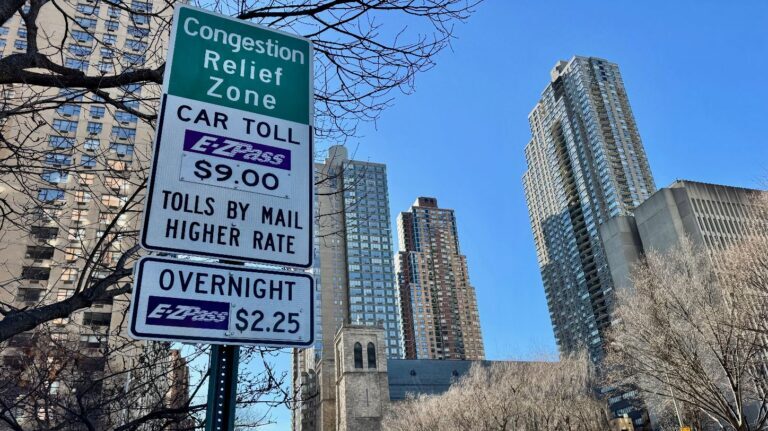
In January 2025, after six years of refinement, the Central Business District Tolling Program was launched in an effort to reduce congestion, fund NYC’s transportation and improve its air quality in the designated Congestion Relief Zone (CRZ).
With its’ population now at 19 million and counting, NYC’s congestion programme arrives at an opportune time. CiTTi Magazine, seeking to understand the challenges surrounding the project’s development, implementation and reception, sat down with one of its chief architects, MTA Bridges and Tunnels’ chief operating officer Allison C. de Cerraño, to delve into the multifaceted complexities affecting the programme’s rollout, including stakeholder coordination, technological integration, and community involvement.